

RECENT POSTS

Groceries: Everything You Need for a Well-Stocked Kitchen
Groceries: Everything You Need for a Well-Stocked Kitchen
Introduction
Everyday groceries are an essential part of our daily lives, helping us prepare meals, snacks, drinks, and traditional recipes at home. From basic cooking ingredients to convenient food products and traditional favorites, groceries make it easier to bring variety, flavor, and comfort to everyday meals.
Different grocery products have different characteristics. Some provide carbohydrates for energy, some contribute protein and fiber, while others are mainly valued for their taste, texture, convenience, or traditional use. The way a food is prepared can also influence its overall nutritional value.
Many everyday grocery items are deeply connected with Pakistani food culture and home cooking. Traditional ingredients have been used for generations, while modern grocery products offer convenience for busy households.
Choosing a variety of foods and using appropriate portions can help create balanced and enjoyable meals. Whether you are preparing a traditional recipe, a quick snack, or an everyday family meal, having the right grocery essentials at home can make cooking simpler and more versatile.
Fruity Nuts brings together a range of everyday grocery essentials along with dry fruits, seeds, spices, herbal products, and other traditional food items, making it easier to find familiar ingredients in one place.
Quick Answer
Everyday grocery foods can play different roles in a balanced diet. Some provide carbohydrates, protein, fiber, healthy fats, or other nutrients, while others are mainly used for sweetness, flavor, texture, or convenience.
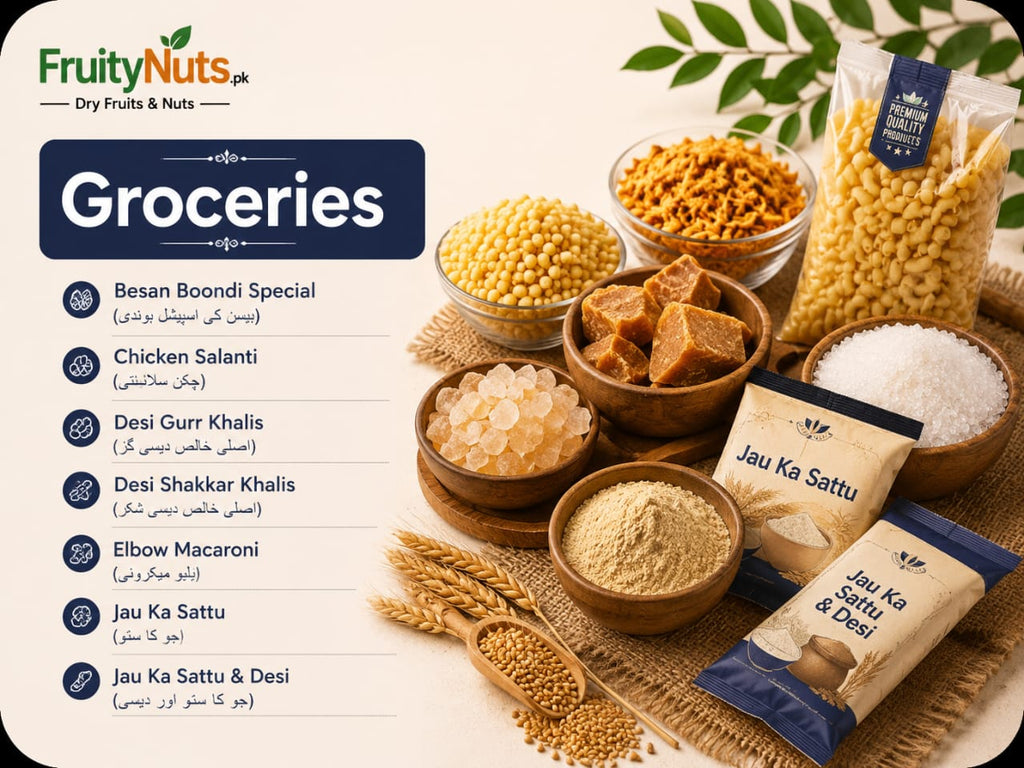
The nutritional value of any grocery product depends on its ingredients, portion size, and preparation method. Traditional items such as Jau Ka Sattu, Desi Gur, Besan Boondi, Elbow Macaroni, and Kabab Papar can all be enjoyed in different ways as part of a varied and balanced eating pattern.
Are Everyday Grocery Foods Good for You?
Yes, everyday grocery foods can be part of a balanced diet when chosen and consumed appropriately.
Different foods serve different purposes. Foods made from chickpea flour can contribute protein, barley-based products can provide carbohydrates and fiber, and traditional sweeteners such as Gur and Desi Shakkar provide energy.
At the same time, products such as boondi, papad, and sweeteners can be more calorie-dense, so moderation is important.
The goal is not to label one grocery item as completely "good" or "bad," but to understand how it fits into your overall diet.
What Are the 7 Benefits of Everyday Grocery Foods?
1. Besan Boondi (Besan Ki Boondi) — Provides Chickpea-Based Nutrition
Besan Boondi, or Besan ki Boondi, is made primarily from besan (chickpea flour).
Since chickpeas naturally contain plant-based protein, besan-based foods can contribute some protein to the diet. Chickpea flour also provides carbohydrates and minerals such as iron and magnesium.
Boondi is commonly used in traditional snacks, raita, kadhi, and other recipes.
Because boondi is generally prepared with oil, portion size matters. Enjoying it as part of a meal rather than in large quantities can help keep the overall diet balanced.
2. Chicken Salanti — A Convenient Savory Ingredient
Chicken Salanti (Chicken Salan) is a savory grocery ingredient used to add flavor to chicken-based meals.
Chicken dishes can provide high-quality protein, which is important for maintaining muscles and body tissues. The overall nutritional value of the final dish depends heavily on the chicken used, cooking method, oil, salt, and other ingredients.
Using a balanced amount of spices, vegetables, and cooking oil can make a chicken salan part of a nutritious home-cooked meal.
Serve it with vegetables, salad, or a moderate portion of roti or rice for a more complete meal.
3. Desi Gur Khalis (Khalis Desi Gur) — Natural Carbohydrate Energy
Desi Gur Khalis, commonly known as Khalis Desi Gur, is a traditional form of unrefined cane sugar.
Gur is primarily a source of carbohydrates and naturally occurring sugars, which provide energy. Unlike highly refined white sugar, Gur retains small amounts of minerals and other components from the original sugarcane juice.
However, Gur is still a concentrated sweetener and should not be considered a health food that can be eaten without limits.
A small amount can be used in traditional tea, milk, desserts, sauces, or homemade drinks.
4. Desi Shakkar Khalis (Khalis Desi Shakkar) — Traditional Sweetener
Desi Shakkar Khalis, or Khalis Desi Shakkar, is another traditional sweetening ingredient.
It provides carbohydrates and sweetness and can be used in traditional recipes, milk, tea, desserts, and homemade preparations.
Like Gur, Desi Shakkar is still a form of sugar. Its traditional or less-refined nature does not make it sugar-free or suitable for unlimited consumption.
Using a small quantity can add sweetness while allowing you to control the amount of sugar in homemade recipes.
5. Elbow Macaroni (Elbow Macaroni) — Convenient Source of Carbohydrates
Elbow Macaroni is a convenient pasta made primarily from wheat-based ingredients.
Its main nutritional role is providing carbohydrates, which are an important source of energy for the body.
Macaroni becomes more nutritionally balanced when paired with protein and vegetables. For example, you can prepare it with chicken, vegetables, beans, or a tomato-based sauce rather than relying only on macaroni.
For a more filling meal, combine Elbow Macaroni with vegetables and a protein source.
6. Jau Ka Sattu (Barley Sattu) — Fiber and Plant-Based Nutrition
Jau Ka Sattu, or Barley Sattu, is a traditional roasted barley-based food that can be prepared as a drink or incorporated into different recipes.
Barley naturally contains dietary fiber, including beta-glucan, a type of soluble fiber. Fiber supports normal digestion and can contribute to feelings of fullness.
Jau Ka Sattu can be mixed with water and other ingredients to make a simple traditional drink.
You can also find Jau Ka Sattu & Desi Shakkar Khalis, which combines barley sattu with traditional sweetness. Since this version contains added sweetener, portion size remains important.
7. Kabab Papar (Kabab Masala papar) — Convenient Traditional Snack
Kabab Papar, commonly called Kabab Papad, is a traditional crispy food that is generally served as a snack or side with meals.
Its main appeal is its crunchy texture and savory flavor. Depending on its ingredients, it can provide some carbohydrates and other nutrients, but its nutritional value varies by recipe and preparation.
If fried, it can absorb additional oil, increasing its calorie content. Baking or roasting can be a lighter preparation method where suitable.
Enjoy Kabab Papar alongside a balanced meal rather than treating it as the main source of nutrition.
How Many Grocery Foods Should You Eat in a Day?
There is no single daily serving for all grocery products because they have completely different nutritional profiles.
A moderate portion of Jau Ka Sattu can be included as part of a meal or drink, while Gur and Desi Shakkar should be used in smaller amounts because they are concentrated sources of sugar.
Similarly, Elbow Macaroni can be included as part of a meal, while boondi and papad are better enjoyed in sensible portions.
Your overall diet, activity level, and individual nutritional needs should determine portion sizes.
Is Jau Ka Sattu a Good Source of Fiber?
Yes, Jau Ka Sattu (Barley Sattu) can contribute dietary fiber because it is made from barley.
Barley is particularly known for beta-glucan, a soluble fiber. Fiber can support normal digestion and help increase feelings of fullness.
However, the amount of fiber in the final Sattu product depends on how the barley is processed. Checking the product's nutrition information gives the most accurate amount.
Is Desi Gur Healthier Than White Sugar?
Gur and white sugar are both concentrated sources of sugar.
Gur is less refined and may retain small amounts of minerals that are largely removed during the refining of white sugar. However, these minerals are present in relatively small quantities, and Gur should still be consumed as a sweetener rather than treated as a major nutrient source.
The most important factor is how much added sugar you consume overall.
Everyday Grocery Essentials.
Some can be included regularly, depending on your overall diet.
Jau Ka Sattu, Elbow Macaroni, and chickpea-based foods can be incorporated into regular meals when portions and preparation are appropriate.
Products such as Gur, Desi Shakkar, Boondi, and Papar are better enjoyed in moderation because they can be relatively concentrated in sugar, calories, or added oil depending on preparation.
Variety and portion control are more important than completely avoiding individual foods.
How Should Grocery Products Be Stored?
Dry grocery products such as Jau Ka Sattu, Besan Boondi, Elbow Macaroni, and Kabab Papar should be kept in clean, airtight containers in a cool and dry place.
Protect them from moisture, insects, heat, and direct sunlight.
Gur and Desi Shakkar should also be stored in a dry place because moisture can change their texture and quality.
Always check products for unusual smell, mold, insects, or signs of spoilage before use.
Homemade vs Ready-to-Use Grocery Products: Which Is Better?
Both can have a place in the kitchen.
Homemade vs Ready-to-Use Grocery Products: Which Is Better?
Both homemade and ready-to-use grocery products can have a place in the kitchen. Homemade options give you more control over the ingredients, preparation, and portion sizes. They can also be a good choice when you have enough time to prepare food from scratch.
On the other hand, ready-to-use products are convenient and save time, especially on busy days. Items such as sauces, spice mixes, snacks, and other packaged groceries can make everyday cooking easier and faster.
The better choice depends on your lifestyle, budget, time, and personal preferences. Homemade products may be ideal when you want more control, while ready-to-use products are useful when convenience is the priority. A combination of both can make your daily kitchen routine easier and more practical.
How Healthy Are Your Everyday Groceries?
There are many simple ways to use these everyday products:
- Use Besan Boondi in raita, kadhi, or traditional snack recipes.
- Prepare Chicken Salan with vegetables and your favorite spices.
- Add a small amount of Desi Gur Khalis to milk or traditional drinks.
- Use Desi Shakkar Khalis in homemade desserts and beverages.
- Prepare Elbow Macaroni with chicken and vegetables.
- Mix Jau Ka Sattu with water for a traditional drink.
- Try Jau Ka Sattu & Desi Shakkar Khalis as a convenient sweetened sattu preparation.
- Serve Kabab Papar as a crispy side with meals.
- Combine Jau Ka Sattu with yogurt or milk for a more filling preparation.
- Add vegetables and protein to macaroni to make a more balanced meal.
- Use small amounts of Gur or Desi Shakkar when you want sweetness without adding large quantities.
Frequently Asked Questions
What is Jau Ka Sattu?
Jau Ka Sattu (Barley Sattu) is a traditional food made from roasted barley. It is commonly mixed with water or other ingredients to prepare a simple traditional drink and can also be used in recipes.
Is Besan Boondi made from chickpeas?
Yes. Besan Boondi is generally made from besan, which is flour made from chickpeas. This gives it some of the nutritional characteristics of chickpeas, including plant-based protein.
What is the difference between Desi Gur and Desi Shakkar?
Both are traditional sweetening products derived from sugarcane, but they differ in processing, texture, appearance, and flavor. Both still contain significant amounts of sugar and should be consumed in moderation.
Can Elbow Macaroni be part of a healthy meal?
Yes. Macaroni can be part of a balanced meal when paired with protein, vegetables, and a suitable sauce. The overall nutritional value depends on the ingredients and preparation.
Is Kabab Papar healthy?
Kabab Papar can be enjoyed occasionally as part of a balanced diet. Its nutritional profile depends on its ingredients and whether it is fried, baked, or roasted. Fried preparation generally adds more fat and calories.
Conclusion
Everyday groceries are an important part of home cooking, and each product has a different role. Besan Boondi, Chicken Salanti, Desi Gur Khalis, Desi Shakkar Khalis, Elbow Macaroni, Jau Ka Sattu, Jau Ka Sattu & Desi Shakkar Khalis, and Kabab Papar can all be used in different meals, snacks, and traditional recipes.
Products such as Jau Ka Sattu can contribute fiber and plant-based nutrition, while chickpea-based foods provide protein. Gur and Desi Shakkar provide sweetness and carbohydrates, and macaroni provides carbohydrates for energy.
The key is to focus on variety, sensible portions, and balanced preparation rather than relying too heavily on any single food.
Looking for everyday Groceries and Traditional Food Products?
Explore Besan Boondi Special, Chicken Salanti, Desi Gur Khalis, Desi Shakkar Khalis, Elbow Macaroni, Jau Ka Sattu, Jau Ka Sattu & Desi Shakkar Khalis, and Kabab Papar at Fruity Nuts.
You can also explore Fruity Nuts' Dry Fruits, Spices, Herbal Products, Seeds, Honey, and other traditional food items to bring more variety to your everyday kitchen.
Discover familiar ingredients, traditional favorites, and everyday grocery essentials all in one place at Fruity Nuts.
Sources
- USDA FoodData Central — Chickpeas, barley, wheat pasta and related foods
- National Institutes of Health — Dietary Fiber and Beta-Glucan
