

RECENT POSTS

Herbs: Nature’s Powerful Cure for Every Need
Herbs: Nature’s Powerful Cure for Every Need.
Introduction
Herbs, seeds, and traditional herbal ingredients have been used in South Asian kitchens and traditional wellness practices for generations. Many of these ingredients are valued for their natural nutrients, plant compounds, fiber, healthy fats, or traditional uses.
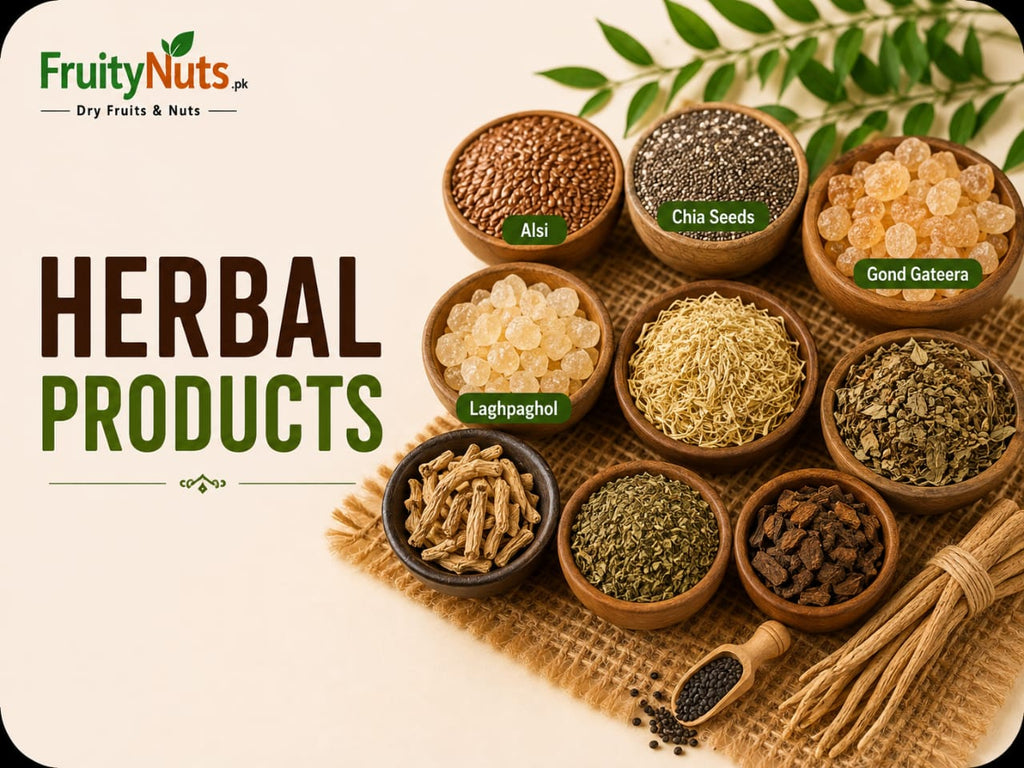
From Flax Seeds (Alsi ke Beej) and Chia Seeds (Chia ke Beej) to Isabgol Husk (Isabgol ka Chilka), Kalonji (Kalonji), Gond Katira (Gond Katira), Gond Kheri (Gond Kheri), and Paneer Dodi, each product has its own characteristics.
Some are particularly rich in plant-based omega-3 fats, some provide soluble fiber, while others are traditionally used in drinks and homemade preparations. Seeds such as Pumpkin Seeds (Kaddu ke Beej) and Char Maghaz also provide protein, healthy fats, and minerals.
Quick Answer
Herbal seeds and traditional ingredients can add useful nutrients and plant compounds to your diet. Flax Seeds and Chia Seeds provide plant-based omega-3 ALA, Isabgol Husk is rich in soluble fiber, Pumpkin Seeds provide protein and magnesium, while Kalonji contains naturally occurring compounds such as thymoquinone.
Traditional ingredients such as Gond Katira, Gond Kheri, and Paneer Dodi have different traditional uses and should be used appropriately rather than treated as medicines.
Are Herbs and Herbal Seeds Good for You?
Yes, many herbs, seeds, and traditional ingredients can be part of a balanced diet.
However, "herbal" does not automatically mean that every product is suitable for everyone or that it can cure a disease. Different products have very different nutritional profiles.
For example, Alsi ke Beej are valued for ALA omega-3 and lignans, Chia Seeds provide fiber and ALA, while Isabgol is particularly useful as a source of soluble fiber.
The best approach is to use these ingredients in appropriate amounts as part of a varied diet.
What Are the 7 Benefits of Herbs and Herbal Ingredients?
1. Flax Seeds (Alsi ke Beej) — Plant-Based Omega-3
Flax Seeds, commonly known as Alsi ke Beej, are one of the best plant sources of alpha-linolenic acid (ALA), a type of omega-3 fatty acid.
They also contain lignans, naturally occurring plant compounds, along with fiber and protein.
ALA is an essential fatty acid, meaning the body cannot produce enough of it on its own and it needs to come from food.
Ground flax seeds are often easier to incorporate into meals than whole seeds because grinding helps make their nutrients more accessible.
You can add Alsi ke Beej to oatmeal, yogurt, smoothies, or homemade seed mixes.
2. Chia Seeds (Chia ke Beej) — Rich in Fiber and ALA
Chia Seeds, or Chia ke Beej, are small seeds with an impressive nutritional profile.
They are particularly known for their dietary fiber and plant-based omega-3 ALA. When soaked in liquid, chia seeds absorb water and develop a gel-like texture.
This makes them useful in overnight oats, smoothies, puddings, and homemade drinks.
Chia seeds also provide minerals such as calcium, magnesium, and phosphorus.
3. Isabgol Husk (Isabgol ka Chilka) — Soluble Fiber Support
Isabgol Husk, commonly called Isabgol ka Chilka, is particularly valued for its high content of soluble fiber.
When mixed with water, Isabgol absorbs water and forms a gel-like substance. This can help add bulk and softness to stool and support normal bowel regularity.
Because Isabgol absorbs a lot of liquid, it should always be taken with sufficient water.
People taking medicines should also be aware that fiber supplements such as psyllium may affect the absorption of some medicines, so appropriate timing and professional advice can be important.
4. Pumpkin Seeds (Kaddu ke Beej) — Magnesium and Plant Protein
Pumpkin Seeds, known as Kaddu ke Beej, are nutrient-dense seeds that provide plant-based protein, magnesium, phosphorus, zinc, and healthy fats.
Magnesium contributes to normal muscle and nerve function, while phosphorus contributes to normal bones and teeth.
Pumpkin seeds also provide zinc, which is important for normal immune function, wound healing, and maintenance of skin and hair.
Peeled Pumpkin Seeds are convenient to eat and can be added to breakfast, salads, homemade trail mixes, or eaten as a snack.
5. Kalonji (Kalonji) — Naturally Occurring Thymoquinone
Kalonji, also known as Nigella Seeds, contains several naturally occurring plant compounds, including thymoquinone.
Kalonji has a long history of traditional culinary and herbal use. Its seeds are commonly added to naan, breads, pickles, curries, and savory foods.
Research has investigated Kalonji and its compounds for various biological effects, including antioxidant activity. However, it should not be presented as a cure for diabetes, blood pressure, infections, or other diseases.
Using small amounts as a culinary ingredient is a simple way to enjoy its distinctive flavor.
6. Char Maghaz (Char Maghaz) — Protein, Healthy Fats and Minerals
Char Maghaz is a traditional mixture of edible kernels and seeds commonly used in South Asian foods and desserts.
Depending on the exact mixture, Char Maghaz can provide plant-based protein, healthy fats, magnesium, phosphorus, and other minerals.
It is often added to milk, desserts, traditional drinks, halwa, and homemade dry-fruit preparations.
Because kernels and seeds are energy-dense, a moderate portion is enough.
7. Gond Katira (Gond Katira) — Traditional Cooling Ingredient
Gond Katira, also known as Tragacanth Gum, is a natural plant gum traditionally used in South Asian drinks and homemade preparations.
When soaked in water, Gond Katira swells and develops a soft, jelly-like texture. It is traditionally added to summer drinks and various homemade recipes.
Unlike seeds such as Alsi or Chia, Gond Katira is not primarily valued as a major source of protein or omega-3 fats. Its main appeal comes from its water-absorbing texture and traditional culinary use.
It should be prepared properly and consumed in appropriate quantities.
Other Herbal Products You Can Add to Your Diet
Fruity Nuts' herbal range can include many other traditional ingredients, each with its own use.
Gond Kheri (Gond Kheri)
Gond Kheri is another traditional edible gum used in South Asian food and herbal preparations. It is commonly incorporated into traditional recipes and preparations where its texture and binding properties are useful.
Paneer Dodi (Paneer Dodi)
Paneer Dodi, also known as Withania coagulans, is a traditional herbal ingredient used in South Asian herbal practices.
It has been studied for various biological properties, but traditional use should not be confused with proven medical treatment. It is best used according to appropriate guidance, particularly if someone is taking medicines or managing a health condition.
Phool Makhana (Phool Makhana)
Phool Makhana, commonly known as Makhana, is an edible seed that is often roasted and eaten as a snack.
It provides carbohydrates, some protein, and minerals and can be a light alternative to heavily fried snack foods when prepared without excessive oil.
Makhana can be roasted with mild spices or mixed with other seeds and dry fruits.
Sabz Hareer (Sabz Hareer)
Sabz Hareer is a traditional herbal ingredient used in South Asian preparations. As with other traditional herbs, its specific use and preparation can vary.
It should be used according to the product's intended culinary or traditional preparation rather than assuming that it can treat a particular disease.
Anardana (Anardana)
Anardana, or dried pomegranate seeds, provides a naturally tangy flavor and can be used in chutneys, curries, spice blends, and savory snacks.
It also contains naturally occurring polyphenolic plant compounds.
Methi Dana (Methi Dana)
Methi Dana, or Fenugreek Seeds, contains dietary fiber and plant compounds and is commonly used in curries, pickles, spice blends, and traditional preparations.
Its distinctive bitter flavor means only a small amount is usually needed.
Sounf (Sounf)
Sounf, or Fennel Seeds, is commonly chewed after meals in South Asian households and is also used in teas, spice blends, and cooking.
Its aromatic compounds give it a naturally sweet, refreshing flavor.
Ajwain (Ajwain)
Ajwain, or Carom Seeds, has a strong, distinctive aroma and is widely used in parathas, breads, savory snacks, and traditional recipes.
It is also traditionally consumed after meals for digestive comfort.
How Many Herbal Seeds Should You Eat a Day?
There is no single daily serving that applies to all herbal products.
Seeds such as Chia, Alsi, Pumpkin Seeds, and Char Maghaz can generally be included in small food portions, while products such as Isabgol require specific preparation with enough water.
Traditional herbal ingredients such as Gond Katira, Gond Kheri, and Paneer Dodi should be used according to their intended preparation and product instructions.
More is not always better, particularly with concentrated herbal products.
Are Herbal Seeds a Good Source of Omega-3?
Some are.
Flax Seeds (Alsi ke Beej) and Chia Seeds are particularly notable because they provide ALA, a plant-based omega-3 fatty acid.
Other seeds, such as Pumpkin Seeds and Char Maghaz, provide healthy fats but are not known primarily for their omega-3 content.
Plant-based ALA is different from the EPA and DHA omega-3 fats found in fatty fish.
Can You Eat Herbal Seeds Every Day?
Many culinary seeds can be included regularly in moderate portions.
Chia Seeds, Alsi ke Beej, Pumpkin Seeds, Sounf, Ajwain, and Kalonji can all be incorporated into normal meals depending on individual tolerance.
However, products such as Isabgol should be taken with adequate water, while concentrated herbal preparations may require more specific guidance.
How Should Herbs and Seeds Be Stored?
Most dried seeds and herbs should be stored in airtight containers in a cool, dry place away from moisture, heat, and direct sunlight.
Seeds containing natural oils, such as Alsi and Pumpkin Seeds, can become rancid if stored poorly. Refrigeration can help preserve freshness for longer periods.
Keep Isabgol, Chia Seeds, Kalonji, and other dry ingredients away from humidity to maintain their quality.
Whole Seeds vs Ground Seeds: Which Is Better?
It depends on the ingredient.
Whole Chia Seeds can be soaked and used directly, while Alsi ke Beej are often ground before consumption because ground flax makes its nutrients easier to access.
Pumpkin Seeds can be eaten whole, while Sounf, Ajwain, and Kalonji are commonly used whole or lightly crushed depending on the recipe.
The best form is usually the one that suits the intended use and can be stored properly.
How Can You Add Herbs and Herbal Seeds to Your Diet?
There are many simple ways to use these products in everyday food:
Add Alsi ke Beej (Flax Seeds) to oatmeal or smoothies.
Soak Chia Seeds and add them to yogurt or breakfast bowls.
Take Isabgol Husk with sufficient water according to the product instructions.
Roast Pumpkin Seeds (Kaddu ke Beej) for a crunchy snack.
Add Kalonji to naan, bread, curries, and pickles.
Use Char Maghaz in milk, halwa, desserts, or homemade dry-fruit mixes.
Soak Gond Katira and use it in traditional drinks.
Add Phool Makhana to a roasted snack mix.
Use Sounf in tea or chew it traditionally after meals.
Add Ajwain to parathas and savory recipes.
Use Methi Dana in curries and pickles.
Add Anardana to chutneys and savory dishes.
Use Dhania (Coriander Seeds) and Zeera (Cumin Seeds) in everyday cooking.
Add Haldi (Turmeric) and Kali Mirch (Black Pepper) to soups, vegetables, and curries.
Frequently Asked Questions
What is the difference between Alsi and Chia Seeds?
Both provide plant-based ALA omega-3 and fiber. Alsi ke Beej (Flax Seeds) are particularly known for their lignans, while Chia Seeds are especially convenient because they absorb liquid and form a gel-like texture.
How should Isabgol Husk be taken?
Isabgol should be mixed with adequate liquid and consumed promptly, followed by sufficient water. Because it is a high-fiber product, starting with an appropriate amount and following the product instructions is important.
Can I eat Pumpkin Seeds every day?
Yes, Pumpkin Seeds can be included in a balanced diet in a moderate portion. They provide protein, healthy fats, magnesium, phosphorus, and zinc.
What is Gond Katira used for?
Gond Katira is traditionally soaked in water and used in drinks and homemade preparations. It develops a jelly-like texture after soaking. Traditional use should not be confused with a proven treatment for disease.
Is Kalonji a medicine?
Kalonji is primarily a culinary seed and traditional herbal ingredient. Although its compounds have been researched for potential biological effects, it should not be used as a replacement for prescribed medical treatment.
Conclusion
Herbal seeds and traditional ingredients can add variety, nutrients, texture, and traditional flavor to everyday food. Alsi ke Beej, Chia Seeds, Pumpkin Seeds, Char Maghaz, Isabgol Husk, Kalonji, Gond Katira, Gond Kheri, Paneer Dodi, and Phool Makhana each have different nutritional or traditional characteristics.
Some, such as Alsi and Chia, stand out for plant-based omega-3 ALA. Isabgol is especially rich in soluble fiber, while Pumpkin Seeds and Char Maghaz provide protein, healthy fats, and minerals.
The important thing is to use each product appropriately rather than expecting one herb or seed to cure a disease. A varied diet containing fruits, vegetables, whole grains, legumes, nuts, seeds, and other nutritious foods remains the foundation of good nutrition.
Looking for quality Herbal Products, Seeds, and Traditional Ingredients?
Choose Alsi ke Beej, Char Maghaz, Chia Seeds, Gond Katira, Gond Kheri, Isabgol Husk, Kalonji, Paneer Dodi, Phool Makhana, Pumpkin Seeds, Sabz Hareer, Methi Dana, Sounf, and Ajwain at FruityNuts.
Choose your favorite herbal products and seeds and add natural variety to your everyday meals and traditional recipes.
Sources
USDA FoodData Central — Seeds, nuts, and edible plant foods
National Institutes of Health — Dietary Fiber
