

RECENT POSTS

Honey: Why This Natural Sweetener Never Goes Out of Fashion
Honey: Why This Natural Sweetener Never Goes Out of Style
Introduction
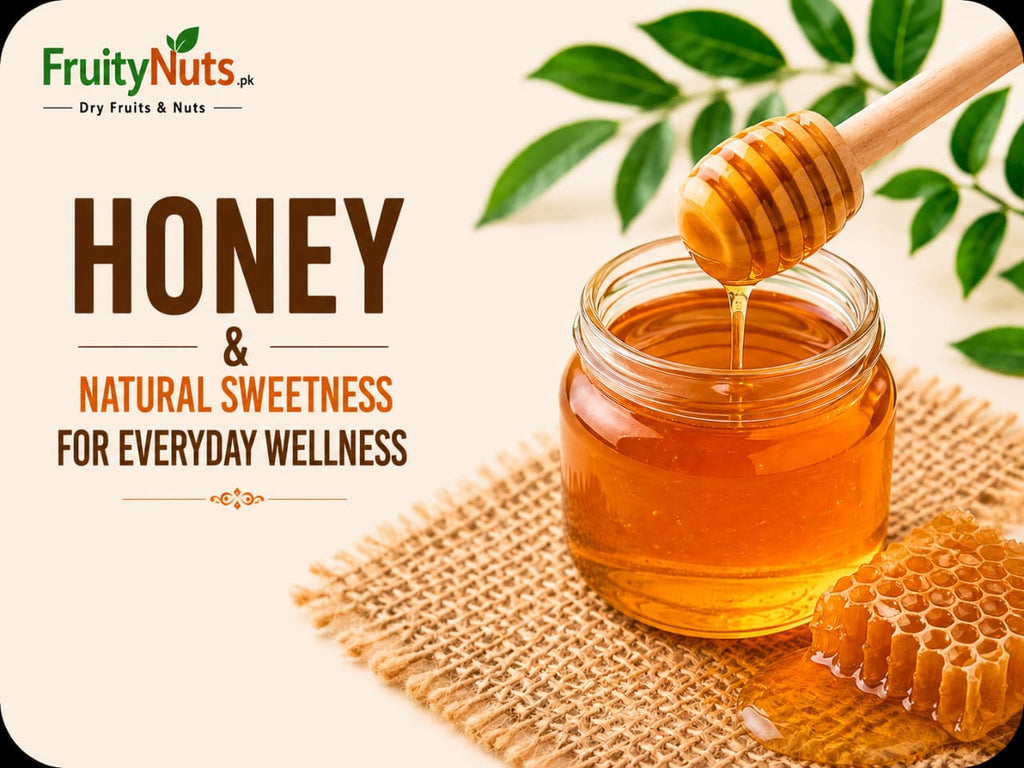
Honey is a naturally sweet food made by bees from flower nectar. It has been enjoyed for centuries for its rich flavor, smooth texture, and versatility. From adding sweetness to milk and tea to using it in breakfast and homemade recipes, Honey can easily become part of an everyday diet.
But honey is more than just a natural sweetener. It contains naturally occurring polyphenols and other antioxidant compounds, and it has traditionally been used to soothe the throat and cough. Honey also has unique properties that have made it useful in certain wound-care settings.
Quick Answer
Honey can provide antioxidant compounds and may help soothe a cough or irritated throat. It also has antimicrobial properties and is used in some medical wound-care products. However, honey is still mainly a source of sugar, so it should be consumed in moderation. Honey should never be given to babies under 1 year of age.
Is Honey Good for You?
Yes, honey can be included in a balanced diet when consumed in moderation.
Unlike refined table sugar, honey contains small amounts of naturally occurring plant compounds and antioxidants. Darker varieties can contain higher levels of some antioxidant compounds.
Honey is also well known for its soothing effect on the throat and cough. However, it is still a concentrated source of sugar and should not be treated as a health cure or replacement for medical treatment.
What Are the 7 Benefits of Honey?
1. May Help Soothe Cough and an Irritated Throat
One of the best-known uses of honey is for soothing coughs and irritated throats.
A small amount of honey may help coat and soothe the throat, and research has found that honey can help reduce cough symptoms, particularly in children over one year of age with upper respiratory infections.
For a simple soothing drink, honey can be mixed into warm water or tea.
Important: Honey must not be given to children under 12 months because of the risk of infant botulism.
2. Provides Antioxidant Plant Compounds
Honey contains naturally occurring polyphenols, flavonoids, and other antioxidant compounds.
These compounds help protect cells from oxidative stress as part of the body's natural defense system. The amount and type of antioxidants can vary depending on the floral source and type of honey.
This makes honey different from ordinary refined sugar, although honey should still be viewed primarily as a sweetener rather than a major antioxidant food.
3. Contains Natural Antimicrobial Properties
Honey has several characteristics that can inhibit the growth of certain microorganisms. Its low water activity, acidity, and naturally occurring compounds contribute to these antimicrobial properties.
This is one reason certain specially prepared medical-grade honeys are used in wound-care products.
However, ordinary food honey should not be applied to serious, infected, or deep wounds without appropriate medical advice.
4. Can Support Wound Care in Specific Medical Settings
Honey has been studied for wound management, and specially prepared medical-grade honey is used in some clinical wound-care products.
Its antimicrobial activity and other properties may support wound healing in appropriate circumstances.
This does not mean kitchen honey should be used as a home treatment for wounds. For significant burns, deep wounds, infections, or slow-healing wounds, proper medical care is important.
5. Provides a Quick Source of Carbohydrate Energy
Honey is primarily made up of naturally occurring sugars, including glucose and fructose. These carbohydrates provide readily available energy.
A small amount of honey can therefore be useful before physical activity or when you want to add quick carbohydrates to a meal.
For a more satisfying snack, combine honey with foods containing protein or healthy fats, such as Badam, Akhrot Giri, or Pista.
6. May Be a Useful Alternative to Refined Sugar
Honey can be used to sweeten foods and drinks while adding its own flavor and small amounts of naturally occurring plant compounds.
You may need less honey than sugar in some recipes because of its strong sweetness and distinctive flavor.
However, honey still counts as added sugar in dietary guidance, so replacing sugar with honey does not mean you can consume unlimited amounts.
7. Adds Flavor and Variety to a Balanced Diet
One of the simplest benefits of honey is its versatility.
It can be added to yogurt, oatmeal, milk, smoothies, fruit, toast, or homemade snacks. This can make nutritious foods more enjoyable and easier to include regularly.
For example, a small amount of honey with Badam, Kishmish Desi Sogi, Injeer, or Khushk Khobani can create a naturally sweet snack without relying on heavily processed desserts.
How Much Honey Should You Eat a Day?
There is no universal amount of honey that everyone needs each day.
Because honey is a concentrated source of sugar, a small amount such as 1–2 teaspoons can be a sensible way to use it as a sweetener, depending on your overall diet.
The important thing is to count honey as part of your overall sugar intake rather than treating it as a food that can be consumed without limits.
Is Honey Better Than Sugar?
Honey and table sugar are both sources of sugar and should both be consumed in moderation.
Honey does have a more complex flavor and contains small amounts of naturally occurring plant compounds that are not present in ordinary refined sugar. However, the difference does not make honey a "free" or unlimited sweetener.
If you enjoy Honey, using a small amount in place of some refined sugar can be a practical choice.
Can You Eat Honey Every Day?
Yes, healthy adults can generally include a small amount of honey in their daily diet.
You can use it in tea, milk, yogurt, oatmeal, smoothies, or homemade recipes.
The main consideration is portion size because honey is concentrated in natural sugars and calories.
Never give honey to babies younger than 12 months.
How Should Honey Be Stored?
Honey should be stored in a clean, tightly closed container at room temperature and kept away from excessive heat, moisture, and direct sunlight.
It does not normally require refrigeration.
If honey becomes cloudy or forms crystals, this does not necessarily mean it has gone bad. Crystallization is a natural process and can occur depending on the type of honey and its glucose content.
Honey vs Other Natural Sweeteners: Which Is Better?
Honey, dates, and other naturally sweet foods can all add sweetness to a diet, but they are not nutritionally identical.
Honey is primarily a concentrated sweetener with small amounts of antioxidant compounds. Dates and Dried Dates provide sweetness along with fiber and minerals because the whole fruit is consumed.
Similarly, Kishmish Desi Sogi provides natural sugars together with fiber and other nutrients, while Khushk Khobani and Injeer provide their own combination of fiber and minerals.
If you want sweetness plus additional texture and nutrients, you can combine a small amount of honey with foods such as Badam, Pista, Akhrot, or dried fruits.
How Can You Add Honey to Your Diet?
Honey is easy to include in everyday meals and snacks.
-
Add a teaspoon to warm milk.
-
Mix honey into tea or warm water.
-
Drizzle it over yogurt or fresh fruit.
-
Add a small amount to oatmeal or porridge.
-
Blend it into smoothies.
-
Spread a little honey over whole-grain toast.
-
Mix honey with Badam, Pista, and Akhrot Giri.
-
Add honey to homemade energy bites containing dry fruits.
-
Combine honey with Kishmish Desi Sogi, Injeer, or Khushk Khobani.
-
Use it as a natural sweetener in homemade desserts.
Frequently Asked Questions
Can honey help with a cough?
Yes. Honey may help soothe the throat and reduce cough symptoms associated with upper respiratory infections. It can be particularly useful at night for children over one year of age and adults.
Is honey good for the skin?
Honey has humectant and antimicrobial properties and is used in some skincare and medical products. However, eating honey should not be considered a treatment for acne, dryness, or other skin conditions.
Does honey expire?
Pure honey has a very long shelf life when stored properly. Changes such as crystallization, thickening, or cloudiness can occur naturally and do not necessarily mean honey has spoiled.
Can honey be given to children?
Honey should never be given to babies under 1 year old because of the risk of infant botulism. For older children, honey can generally be consumed as part of an appropriate diet.
Is honey suitable for people with diabetes?
Honey contains sugar and can raise blood glucose levels. People with diabetes should treat honey as a source of carbohydrate and use it according to their individual dietary plan and healthcare professional's advice.
Conclusion
Honey is a naturally sweet and versatile food that can add flavor to everyday meals while providing small amounts of naturally occurring antioxidant and plant compounds. It is particularly well known for soothing coughs and irritated throats, while specially prepared medical-grade honey also has applications in wound care.
At the same time, honey remains a concentrated source of sugar, so moderation is important. Using a small amount to sweeten nutritious foods can be a practical way to enjoy it.
Whether you add Honey to milk, yogurt, oatmeal, tea, or pair it with Badam, Pista, Akhrot Giri, Kishmish, Injeer, and Khushk Khobani, it can bring natural sweetness and a distinctive flavor to your everyday diet.
Looking for quality Honey and other nutritious products for your everyday routine?
Explore Honey along with Badam, Kaju, Pista, Akhrot Giri, Kishmish Desi Sogi, Injeer, Khushk Khobani, and Khushk Alu Bukhara at FruityNuts.pk.
Choose your favorite products and make your everyday snacks and meals more delicious with naturally enjoyable ingredients.
Sources
-
National Institutes of Health — Honey and cough research
-
Centers for Disease Control and Prevention — Infant Botulism and Honey
